Overcoming Challenges in Blended Courses
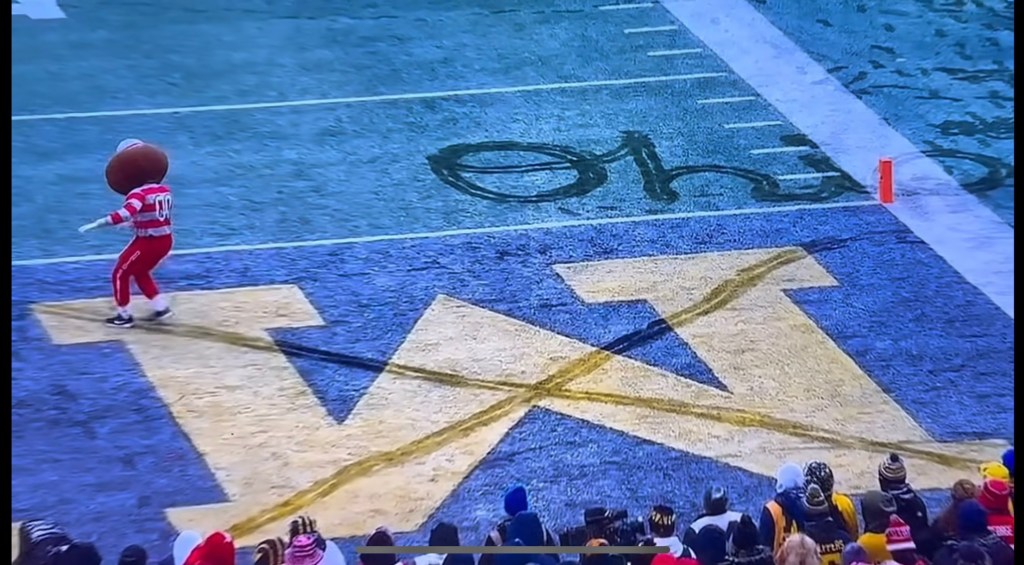
Today was the day that all Ohio State fans wait for each year. The Game…also known as the Greatest Rivalry of All Time. It’s a big deal in the Midwest, a very big deal. So much so that you can go practically anywhere in the United States and shout out the letters “O-H,” and I guarantee that someone else will shout out the rest (IFYKYK). So why am I telling you all this? Well, first, it’s important stuff, right? You have these 2 teams, facing one of the most significant challenges of their college season, battling for bragging rights and a spot to move forward. Ohio State defeated Xichigan today, 27-9, and are now advancing to the Big Ten Championship game. This day is stressful for fans because, even though we are undefeated so far this season, this is the game that matters above everything else. And we have sadly not won in the last 4 years, despite being the 2024 National Champions. So yes, today was nothing short of amazing…a great day in Buckeye Nation! And a huge congratulations goes out to those young men who played their hearts out, and their coaching staff, who led them to victory. Until next year TTUN…
And alas, I can begin my own journey of facing challenges. My Buckeyes have encouraged me to embrace something that has given me a world of frustration, much like listening to Xichigan fans live in the past (we won, it’s a new day)…the dreaded blended course. What exactly is a blended course, you ask? It’s a type of curriculum instruction that involves educators using technology-based or virtual platforms alongside in-person learning. The state of Ohio has recognized the blended learning model since 2012, but the onset of the COVID-19 global pandemic during the 2020-2021 academic year rapidly changed educational approaches and increased its usage for student instruction (ODE, 2024). We were all thrust into this type of learning platform, whether or not we knew what we were doing. It was difficult, and honestly, it still is. The district where I am employed still has a virtual school, where I provide occupational therapy services to enrolled students. Now this is not a new concept, so I am not going to act as if I am reinventing the wheel, but I have learned a thing or two after providing this type of service delivery.
The first thing that I have learned is that it is not all bad. It forces me to think outside my comfort zone and come up with new ways to teach students. I try to learn their interests and dislikes, and it gives me a glimpse into their home life so that I can try to integrate myself into their world. I create learning packets based on their goals and either snail-mail or hand-deliver them to their homes, using some of the same materials I would use if they were completing in-person learning. I use my Google Classroom to provide instructions and to let them know what supplies they will need when they log in virtually. I try to give parents or caregivers as much detail and information as possible, because ultimately, they are the ones completing the hands-on techniques I would normally do.
The second thing I have learned is that there are many online resources available for virtual learning platforms. If you can learn to use Google Applications, you are already making progress, because these applications allow you to teach both virtually and in person and support blended learning. Some sites require memberships, but most provide some sort of free access to content. But be cautious and pay attention to those terms, because there were definitely some sites that got me after that free trial ended. If you do not plan on using them regularly, CANCEL THEM!! Those membership fees can add up. Here are some of the sites that I’ve found helpful:
ABCya
Education.com
Tools To Grow
YouTube
Createprintables.com
The OT Toolbox
PBSkids
Canva
Kahoot
Quizlet
All Google Applications (Docs, Classroom, Sheets, Slides, Forms, etc.)
And the last thing I have learned is that if you design your curriculum appropriately, it can be delivered through any platform, whether virtual, in-person, or blended. I have branched out this semester from teaching my school-aged kiddos virtually to incorporating a blended learning course for my graduate-level students, whom I precept throughout the year. This is a new concept for me, but I am learning as I go. It’s helpful because, depending on the type of graduate student I have (Level I, Level II, or Capstone), I can adjust my course based on their needs. Capstone students may not be physically present with me daily, so the blended course provides a means for us to keep constant communication.
Thus far, I have learned that I should have trialed some of the online tools a little more before I tried to integrate them all at once. I was not well-versed in them, so I could not expect grad students to be either. For instance, I tried using Edpuzzle and Pearltrees, both great platforms for blended learning. However, I just “learned” these tools, and I say that facetiously, so I have no idea what I was thinking trying to go full-on tech wiz and use both…sigh. A big error, but one that I can hold my head up high and say that I tried. I will continue to try, though, because I actually really like those platforms; I just need to get better at using them. If you have any tips or ways that you have used either, please share! I am relatively good with Canva, which is what I should’ve stuck to. There are still so many features on Canva that I am not as familiar with, but for me, this has been my constant go-to for blended learning because you can customize it based on what you need or use the templates that are already available.
Overall, designing a blended course was actually fun, despite the challenges I faced. Clearly, this is something that I will continue to tweak every year so that I can improve, and ultimately be the baddie blended course creator that I know I am;-) I am currently making changes to create a separate course that uses what I already designed for grad students for other OT preceptors who want to use this type of platform. Any kind of virtual learning can be challenging, no matter who the audience is. I have learned this firsthand, from teaching my school-age children to my graduate-level students. However, now that I have taken on this challenge, I am becoming more and more comfortable learning new tools and less afraid of technology.
References
Ohio Department of Workforce and Education. (2024). Blended learning guidance. Retrieved November 29, 2025, from https://education.ohio.gov/Administrators/Education-Delivery-Models/Blended-Learning-Guidance#:~:text=Blended%20learning%20is%20the%20delivery,using%20a%20blended%20learning%20model.
 The Lasso of Learning: Chronicles of a School-Based OT
Leave a comment